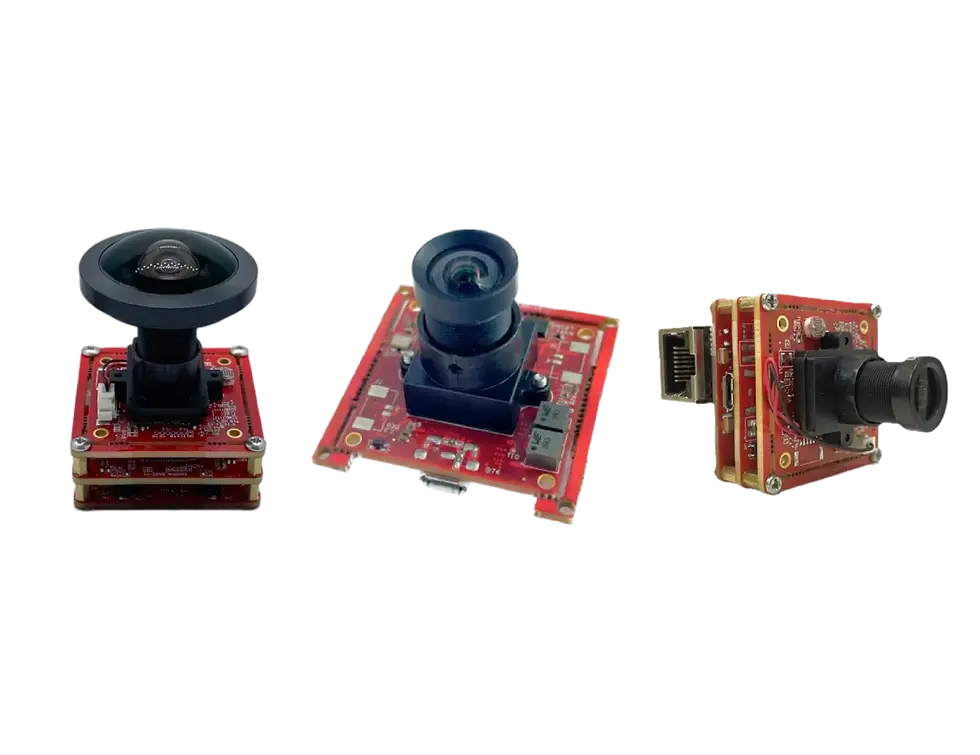
Right Sony Starvis 2 Sensor Camera for Your Project
The Sony Starvis 2 sensor changes what a low-light scene looks like on screen, and that shift matters before any camera or interface decision gets made. Vadzo Imaging builds around this sensor family so system integrators spend less time compensating for weak signal and more time building the application itself. Whether the target design calls for a compact USB camera, a networked GigE camera, or a wireless setup, our lineup covers the resolution, interface, and imaging performance a Starvis 2-based project demands.
Understand the Sony Starvis 2 Sensor Before You Choosing a Camera Module
Vadzo Imaging camera products are validated around the Sony Starvis 2 Sensor across multiple form factors and interfaces. A Starvis 2 Sensor Camera from Vadzo brings that same low-light advantage to GigE, USB, and wireless designs alike, so a customer is not locked into one connector to get the sensor generation the project needs. Each Starvis 2 Camera Module in the portfolio ships with confirmed specifications rather than placeholder datasheet numbers, and a Sony Starvis 2 Camera from this lineup can move from a 2MP model up through a 4K model without changing the sensor family mid-project. That consistency matters for teams standardizing a product line around a single supplier.
Interface Options for the Sony Starvis 2 Sensor
This sensor pairs with the interface a project actually needs. A Starvis 2 GigE Camera connects over standard Ethernet cabling for long cable runs and PoE-powered deployments, which suits fixed installations that sit far from a host computer. A Starvis 2 USB Camera plugs directly into a workstation or single-board computer and streams over UVC without a driver install, which matters for teams that want a camera running within minutes of unboxing. For board-level integration, a Starvis 2 MIPI Camera path is also on the table, and our engineering team can advise on the current option status for that connector during a design consultation.
Sony Starvis 2 Sensor Performance and Imaging Technology
Low light performance is where the Sony Starvis 2 Sensor earns its reputation, and it is exactly where Vadzo Imaging puts the most validation effort. A Sony Starvis 2 Low Light Camera built on this sensor pulls in more usable signal per pixel than earlier back-illuminated designs, which keeps footage clean instead of grainy once the sun goes down. Pairing that sensor with tuned image signal processing produces a Starvis 2 HDR Camera capable of holding detail in both a bright sky and a shadowed doorway within the same frame. For applications that run entirely after dark, a Starvis 2 Night Vision Camera from this lineup resolves shapes and faces at distances where older sensors would return only noise. Teams weighing options should also look at raw sensitivity, since a Sony Starvis 2 High Sensitivity Camera captures a usable image at light levels where competing sensors need supplemental illumination, and the underlying Starvis 2 Low Light Sensor design is the reason that advantage holds up across every interface Vadzo offers.
Built for Surveillance, Machine Vision, and Industrial Applications
Vadzo camera products built on this sensor show up across the applications the Starvis 2 generation was designed for. A Starvis 2 Surveillance Camera holds a clean image through a full night shift without relying on visible infrared illumination that can wash out a scene. A Starvis 2 Machine Vision Camera brings the same sensitivity to inspection lines that run in dim enclosures or variable ambient light, where strong low light response keeps false rejects down. For designs that mount inside a larger system rather than standing alone, a Starvis 2 Embedded Camera Module fits directly onto a carrier board or custom enclosure. Continuous duty environments are covered as well, since a Starvis 2 Industrial Camera from Vadzo is built to run day after day in conditions that would shorten the service life of a consumer-grade sensor.
Why Choose Vadzo Imaging for Your Next Sony Starvis 2 Sensor Camera
Vadzo Imaging has spent years building embedded vision hardware for OEMs and system integrators, and that experience shows every Sony Starvis camera we release. As a dedicated Starvis 2 Camera Manufacturer, our engineering team validates each sensor and interface pairing before it reaches a customer, backs every module with direct technical support, and keeps a broad enough catalog that switching resolution or interface mid-project does not mean switching vendors. Anyone comparing an OEM Starvis 2 Camera Module against a datasheet-only listing should ask for real sample footage first, since a spec sheet cannot show noise performance the way an actual frame can. When a design partner needs the Best Starvis 2 Camera Module for a specific mix of resolution, interface, and light condition, Vadzo Imaging is the name that keeps coming up.
Vadzo's Sony Starvis 2 Sensor Camera Modules
Model Name | Sensor | Resolution | Interface | Shutter | Chroma | Buy Now |
|---|---|---|---|---|---|---|
Innova-662CRE | Sony IMX662 | 2MP | GigE | Rolling | Color | |
Innova-678CRS | Sony IMX678 | 8MP | GigE | Rolling | Color | |
Wave-678CRS | Sony IMX678 | 8MP | WiFi | Rolling | Color | |
Wave-662CRE | Sony IMX662 | 2MP | WiFi | Rolling | Color | |
Merlin-662CRS | Sony IMX662 | 2MP | USB | Rolling | Color | |
MerlinPlus-662CRS | Sony IMX662 | 2MP | USB | Rolling | Color |
Quick Samples Dispatch
Find the Right Camera for Your Project Today.
Samples procured typically ship within 5-7 business days of order confirmation, with tracked international shipping. Compressed development timeline? You can be capturing frames from a Vadzo camera the same week you shortlist it.
RoHS 3 · REACH · NDAA (Selected Models)
No MOQ (Minimum Order Quantity)
Ships Worldwide
Frequently Asked Questions
1.How can a team choose a camera product with superior performance in low light conditions?
The strongest choice for low light performance starts with sensor generation rather than resolution alone. A camera built around the Sony Starvis 2 sensor pulls in a more usable signal per pixel than earlier back-illuminated designs and keeps footage clean at night instead of grainy. Vadzo Imaging builds every Starvis 2 Sensor Camera around this sensor family and pairs it with tuned image signal processing, so a low-light scene stays readable at close range and at distance alike.
2.Where can someone buy camera products equipped with a Sony Starvis 2 sensor online?
Vadzo Imaging camera products built around the Sony Starvis 2 sensor are available directly through vadzoimaging.com, with full specifications, drivers, and datasheets published on each product page. Buyers can also contact our engineering team before ordering to confirm sensor, interface, and mounting compatibility for a specific build.
3.Which camera manufacturers offer models with the Sony Starvis 2 sensor feature?
A handful of manufacturers have adopted the Sony Starvis 2 sensor since its release, though not all validate it across GigE, USB, and wireless interfaces the way Vadzo Imaging does. As a dedicated Starvis 2 Camera Manufacturer, Vadzo pairs the sensor with OEM-friendly mechanics and driver support, which is why system integrators treat us as a Sony Starvis camera source rather than a single product line.
4.What makes the Sony Starvis 2 sensor an improvement over earlier Starvis sensors for night vision work?
The Sony Starvis 2 sensor improves the original Starvis line with a larger pixel structure and lower read noise, and together these extend usable dynamic range in mixed lighting. That advantage matters most in night vision and other Starvis 2 Night Vision Camera applications, where a scene might hold bright headlights next to a near-black shadow in the same frame. The result is a sensor that resolves detail in both extremes instead of clipping one of them.
5.What interfaces are available for a Sony Starvis 2 sensor camera in an OEM design?
Vadzo Imaging offers the Sony Starvis 2 sensor across GigE, USB, and wireless interfaces, covering Starvis 2 GigE Camera, Starvis 2 USB Camera, and wireless builds for flexible deployment. Teams planning a Starvis 2 MIPI Camera integration can also reach out directly, since board-level options are evaluated case by case depending on carrier board and volume.